
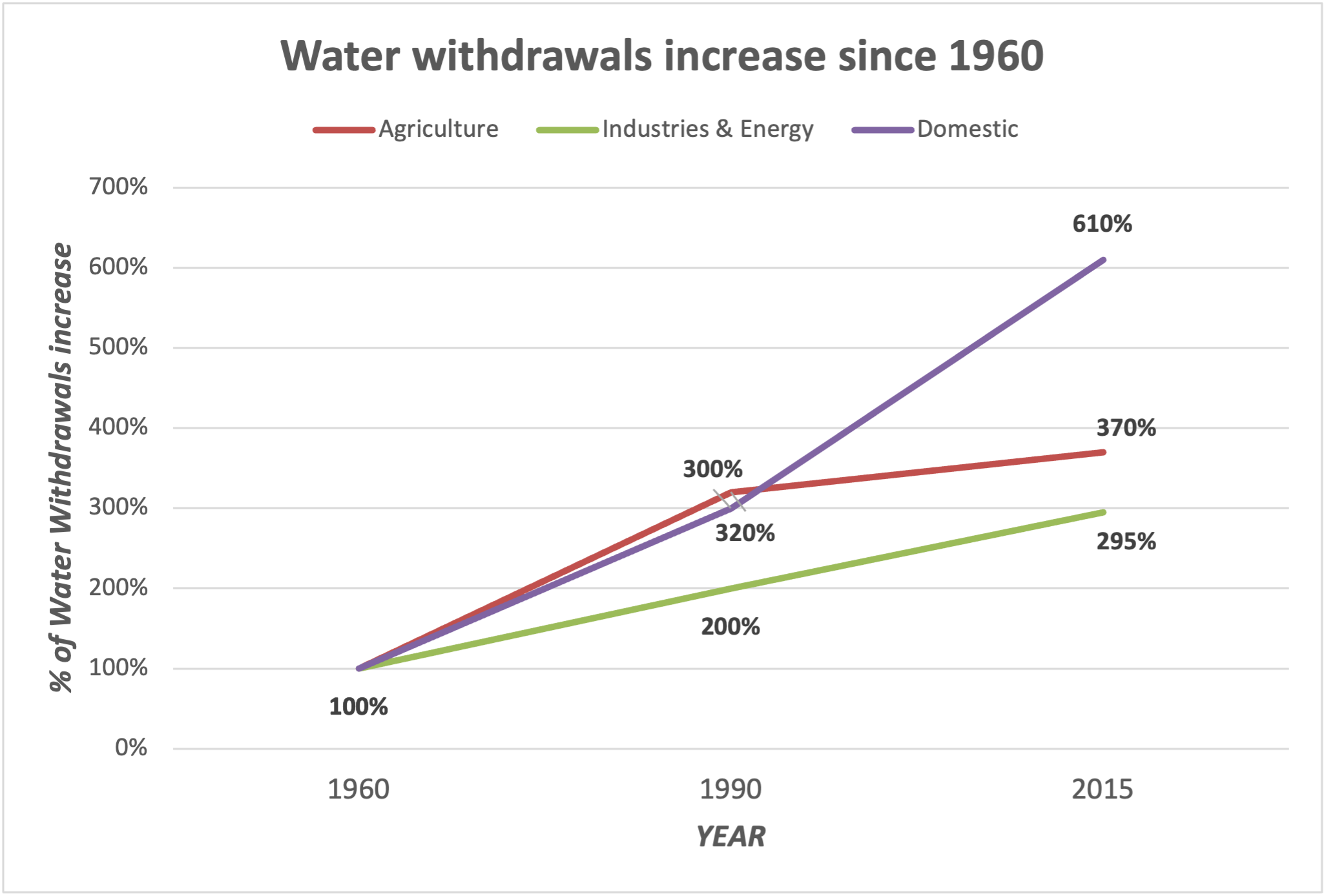
Obviously, water consumption increased in the last 60 years…by a lot. There is a paradox. Growing demand for food, the development of new industries (such as AI and data centres), and the climate crisis, including rising average temperatures and more frequent and severe droughts, are all expected to increase water demand. Global water demand is projected to increase by 20% to 25% by 2050. At the same time, these factors will exacerbate water scarcity (not enough accessible, safe, and reliable water to meet the needs of people, agriculture, industry, and ecosystems) in the future.
For instance, it is predicted that 100% of the population in the Middle East and North Africa will be living under conditions of extreme water stress (lack to meet human and ecological demand for fresh water) by 2050, while water demand in Sub-Saharan Africa is expected to increase by 163% over the same period.
According to the United Nations Children's Fund (UNICEF), which leads the coordination of Water, Sanitation and Hygiene (WASH) humanitarian assistance, one quarter of the world's population lacks access to safe drinking water in 2026. Over the past five years, internal migration has increased by 10% due to water scarcity.
Solutions exist, but they require changes in the way we live and manage water resources. Potential measures include reducing the number of golf courses or replacing natural turf with synthetic grass, limiting the construction of private swimming pools, replacing highly water-intensive crops such as alfalfa (livestock fodder), with less water-demanding alternatives such as cotton or wheat, decreasing livestock production, and encouraging lower meat consumption.